

125·
13 days agoMe
Slashdot > Digg > Reddit > Lemmy

I’m from space!
Me
Slashdot > Digg > Reddit > Lemmy
Stupid sexy crack head
deleted by creator
I still get panic attacks because they removed the polish sausage from the food court.

Then federated Microsoft Teams

We don’t need to legalize. If we decriminalized, then took the money for jailing and funded mandatory treatment, we could do what Portugal did in the early 00’s.
Minor clarification -Technically it was decriminalized, not legalized. Distribution will send you to jail and, after 2 or more possession offenses, you’re forced into a treatment program.
And sadly, things have started to get worse again in Portugal. Lately they’ve been sending fewer people to treatment, and surprise surprise, usage and deaths have gone up.

Re: on by default
IMHO, the problem isn’t that it’s on by default, it’s the fine tuning of the feature. The velocity and pattern needed to trigger it + the lack of a reasonable max scale.
MacOS has had this on by default for a decade, but it feels more intentional when it appears. Meanwhile, I litterally still see KDE threads from people trying to troubleshoot “bugs” about their cursor size.
The KDE cursor needs about 15 min of a motion designer sitting next to the engineer that coded this.
Been in Mac OS since El Capitan (10.11.0) in 2015
Maybe I’m missing something, but I thought you could only upvote / downvote posts. Comments were just a thread, and whoever commented first was at the top.
Hence why a lot of our early shitposting was just commenting “first” as soon as an interesting post when live.
I should’ve clarified.
It had post voting, but no comment voting.
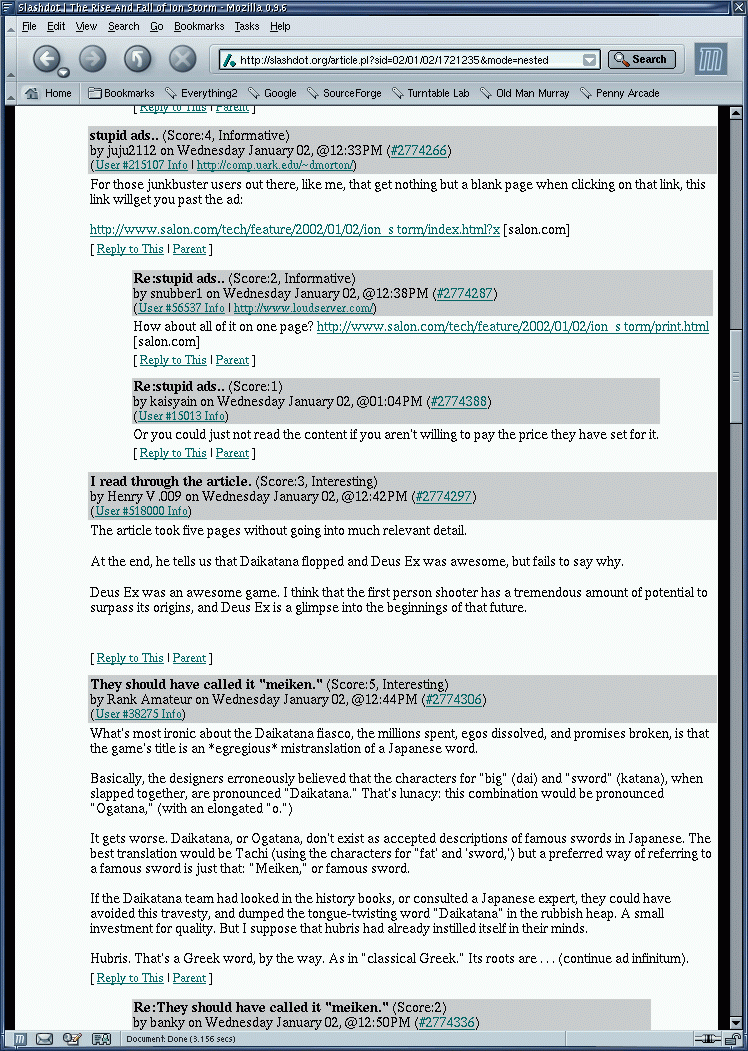
My migration was primarily driven by threading, voting, and ads.
And that’s a symptom of media and social media echo chambers.
This man always has the most forced smile I’ve ever seen.


Maybe it wasn’t for you. But a lot of people really liked it. 🤷
I’m open to it. Some of the best directors and writers for these movies came from doing comedy and drama.
I wonder if this will actually be interesting. The writers and director behind this did Beef. Also, Marvel seems to be doing less stuff now. Their worst shows and movies all came about when Kevin Feige was trying to pay attention to 100 things at once.





















There are concepts of a plan