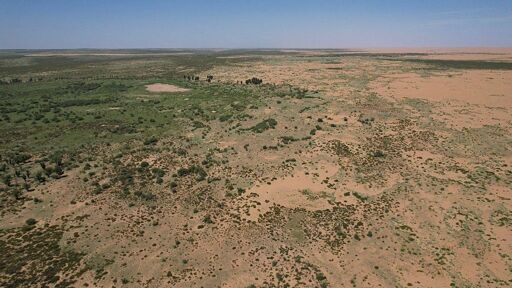
China’s biggest tree-planting effort is the Great Green Wall in the country’s arid and semi-arid north. Started in 1978, the Great Green Wall was created to slow the expansion of deserts. Over the last five decades, it has helped grow forest cover from about 10% of China’s area in 1949 to more than 25%
Collectively, China’s ecosystem restoration initiatives account for 25% of the global net increase in leaf area between 2000 and 2017.
“Even though the water cycle is more active, at local scales more water is lost than before,” Staal said.
This has important implications for water management, because China’s water is already unevenly distributed. The north has about 20% of the country’s water but is home to 46% of the population and 60% of the arable land, according to the study. The Chinese government is trying to address this; however, the measures will likely fail if water redistribution due to regreening isn’t taken into account, Staal and his colleagues argued.
Look at that, China fucking up the entire ecosystem
I’m not sure that’s really the take away. Its just that greening an area doesn’t always result in local benefits. But that evaporation will eventually come down somewhere. Upwards of 4,000 miles away.
If we all rebuilt historical forests we would all benefit.
It’s like if you’re a sewage treatment plant, the better job you do, the more you help people down stream, but it still doesn’t do anything about upstream problems.
The benefit of forest is still there, and I’m glad they discover a problem it can potentially caused so that any other country that wish to replicate this can do a better planning