Star Trek teleporter: fax machine / shredder combination (remember that time the shredder bit malfunctioned and we got double Riker…?)
Wormhole: just a weird long gateway (with a chance of spaghettification). No problems there unless it somehow takes you through some sort of hell dimension or something.
Stargate: somehow both, because let’s be frank, the Ancients were kind of dicks. (Also, didn’t actually need the whole buffer thing, that one Orlin built in Carter’s basement with a box of scraps was completely analog, no computer bits, and it worked just fine until it didn’t.)
It’s not like that Riker episode was taken lightly. But, you would think that an event like that would have led to a lot more soul searching. For example, occasionally there were religious people in Star Trek – what does this say about transporters and souls?
From what I remember, they spent a lot more time on the mechanics of a dude getting duplicated: the bureaucracy of it (his rank, etc.) and how it affected his relationships with Troi etc.
But, no talk of how every time someone is transported the original body is killed? No talk about how this might be a means of creating an army of clones?
Same deal with people being stored for a long time in the pattern buffer. Does this mean you can create backups of people so that if they die they can simply be beamed from that data?
they always had a bit of extra something, if some writer decided they need it for the story, that is the problem with made-up stuff. transporters and macroeconomy of their utopian society were prime examples of this, they were always interpreted as the writer decided to and it was better not to think about it much.
Schlock Mercenary (webcomic) had a couple of good takes on this concept. The “wormgates” in SM were more like teleporters, in that they disintegrated you, reduced you to data, and recreated you on the other side. As a side effect, the Gatekeepers could make copies of you in transit, which is how they kept their galactic dominance intact, by interrogating and shredding gate-clones. Arguably, they murdered trillions of sapients with their gates.
In-universe, it’s impossible to generate big wormholes, but the F’Sherl’Ganni “faked” it and everyone just kind of assumed there was some weird physics they’d figured out that nobody else knew.
The Teraport, in SM (or “tear-apart” as it was sometimes called derisively) at least had some continuity, by porting you through billions of microscopic wormholes. Whether that kills you or not, well, that’s between you and Carl.
The “wormgates” in SM were more like teleporters, in that they disintegrated you, reduced you to data, and recreated you on the other side.
That’s exactly how stargates work in the Stargate series (except for the bit where they could work like normal wormholes, but they’ve got a scanner/shredder/maker mechanism stuck in front of the wormhole for no apparent reason).
I don’t think they ever duplicated anyone (with a stargate), but Teal’c('s data) once got stuck in the buffer. Technically nothing would prevent the gate from duplicating travelers, as long as it had enough energy and it could be prevented from flushing the buffer.
The Stargate ring transporters didn’t distirybthe copy, they just fired the object out in a straight line inside hyperspace. Though the Asgard system properly did kill the original.
They did digitise the victim, sorry, “traveler”, send the data and mass through the wormhole, store the data in a buffer on the receiving gate (there might have also been a buffer for outgoing data in the sending gate, I’m not sure) and reconstitute a copy on its “event horizon” (which wasn’t really an event horizon and actually turned out to have absolutely nothing to do with the wormhole, being instead the interface for the fax machine).
Teal’c (or rather data that could be reconstituted into a copy of Teal’c) once got stuck in the buffer, and Carter had to hack the gate so that it would create an “event horizon” without the actual wormhole, thus tricking the fax machine into reconstituting “Teal’c”, about two days later than it should have of it hadn’t malfunctioned.
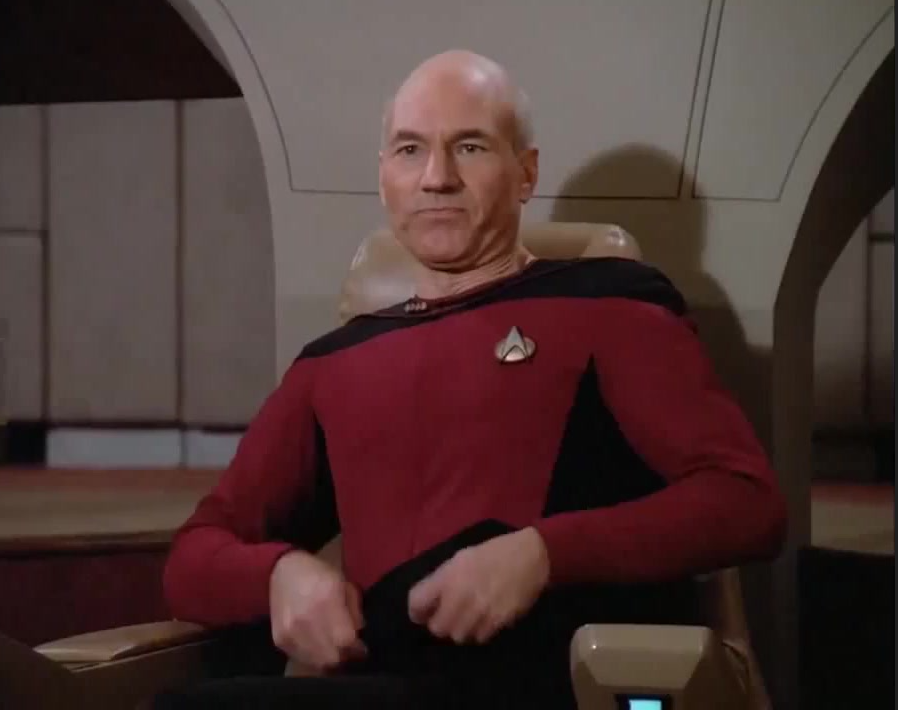


Star Trek teleporter: fax machine / shredder combination (remember that time the shredder bit malfunctioned and we got double Riker…?)
Wormhole: just a weird long gateway (with a chance of spaghettification). No problems there unless it somehow takes you through some sort of hell dimension or something.
Stargate: somehow both, because let’s be frank, the Ancients were kind of dicks. (Also, didn’t actually need the whole buffer thing, that one Orlin built in Carter’s basement with a box of scraps was completely analog, no computer bits, and it worked just fine until it didn’t.)
It’s not like that Riker episode was taken lightly. But, you would think that an event like that would have led to a lot more soul searching. For example, occasionally there were religious people in Star Trek – what does this say about transporters and souls?
From what I remember, they spent a lot more time on the mechanics of a dude getting duplicated: the bureaucracy of it (his rank, etc.) and how it affected his relationships with Troi etc.
But, no talk of how every time someone is transported the original body is killed? No talk about how this might be a means of creating an army of clones?
Same deal with people being stored for a long time in the pattern buffer. Does this mean you can create backups of people so that if they die they can simply be beamed from that data?
that is exactly what they did when they lost picard in https://en.wikipedia.org/wiki/Lonely_Among_Us
That had a bit of extra magic sprinkled in though. It wasn’t purely transporter tech.
they always had a bit of extra something, if some writer decided they need it for the story, that is the problem with made-up stuff. transporters and macroeconomy of their utopian society were prime examples of this, they were always interpreted as the writer decided to and it was better not to think about it much.
I member!
Was interesting to see people try to explain to him why he was left behind…
Schlock Mercenary (webcomic) had a couple of good takes on this concept. The “wormgates” in SM were more like teleporters, in that they disintegrated you, reduced you to data, and recreated you on the other side. As a side effect, the Gatekeepers could make copies of you in transit, which is how they kept their galactic dominance intact, by interrogating and shredding gate-clones. Arguably, they murdered trillions of sapients with their gates.
In-universe, it’s impossible to generate big wormholes, but the F’Sherl’Ganni “faked” it and everyone just kind of assumed there was some weird physics they’d figured out that nobody else knew.
The Teraport, in SM (or “tear-apart” as it was sometimes called derisively) at least had some continuity, by porting you through billions of microscopic wormholes. Whether that kills you or not, well, that’s between you and Carl.
That’s exactly how stargates work in the Stargate series (except for the bit where they could work like normal wormholes, but they’ve got a scanner/shredder/maker mechanism stuck in front of the wormhole for no apparent reason).
I don’t think they ever duplicated anyone (with a stargate), but Teal’c('s data) once got stuck in the buffer. Technically nothing would prevent the gate from duplicating travelers, as long as it had enough energy and it could be prevented from flushing the buffer.
The Stargate ring transporters didn’t distirybthe copy, they just fired the object out in a straight line inside hyperspace. Though the Asgard system properly did kill the original.
They did digitise the victim, sorry, “traveler”, send the data and mass through the wormhole, store the data in a buffer on the receiving gate (there might have also been a buffer for outgoing data in the sending gate, I’m not sure) and reconstitute a copy on its “event horizon” (which wasn’t really an event horizon and actually turned out to have absolutely nothing to do with the wormhole, being instead the interface for the fax machine).
Teal’c (or rather data that could be reconstituted into a copy of Teal’c) once got stuck in the buffer, and Carter had to hack the gate so that it would create an “event horizon” without the actual wormhole, thus tricking the fax machine into reconstituting “Teal’c”, about two days later than it should have of it hadn’t malfunctioned.