I mean, every once in a while something comes along. But the upgrade notes are pretty low volume, even compared to upgrade notes for a releases-based distro. After all, isn’t that true of any distro that uses a release cycle also? They just pile everything breaking up into a release.
I’m not trying to say “you should run a server on arch”, but like in the same way I wouldn’t say to a random person “you should run an internet facing server”. But neither one is that scary I’d you know how to isolate your workloads etc.
isn’t that true of any distro that uses a release cycle
I’ve never heard it being a condition in Mint or somesuch that one must read and follow the release notes lest they meets a blank screen. I’ve had my input preferences bungled by Mint, which took a couple minutes of fiddling to get back — but not the entire system video output.
I mean I haven’t encountered that with Arch either. It’s also pretty straightforward as with any other distro to boot into a rescue disk, chroot in, and fix issues.


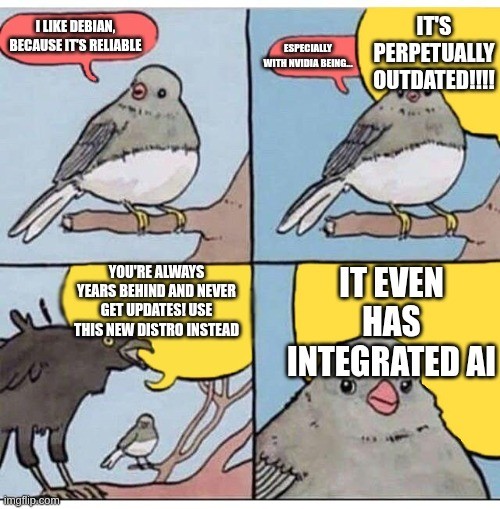
It’s really no different from any other distro tbh
Except, I’ve been told that if one doesn’t read the upgrade notes every time they upgrades anything, they gets fucked in the ass.
I mean, every once in a while something comes along. But the upgrade notes are pretty low volume, even compared to upgrade notes for a releases-based distro. After all, isn’t that true of any distro that uses a release cycle also? They just pile everything breaking up into a release.
I’m not trying to say “you should run a server on arch”, but like in the same way I wouldn’t say to a random person “you should run an internet facing server”. But neither one is that scary I’d you know how to isolate your workloads etc.
I’ve never heard it being a condition in Mint or somesuch that one must read and follow the release notes lest they meets a blank screen. I’ve had my input preferences bungled by Mint, which took a couple minutes of fiddling to get back — but not the entire system video output.
I mean I haven’t encountered that with Arch either. It’s also pretty straightforward as with any other distro to boot into a rescue disk, chroot in, and fix issues.
Maybe a little in that aur is a commonly used thing, but then fedora has copr which is pretty much the same thing but a little easier to use.